Exploring Gasket Materials and Their Role Across Industries
Every industry has its unsung heroes, and in the world of mechanical systems, gaskets quietly hold that title. They’re often tucked between surfaces, working under pressure, unseen but entirely essential. Whether preventing a leak in a fuel system or maintaining the integrity of a high-temperature valve, gaskets do more than seal, they protect, stabilize, and preserve. Choosing the right gasket means understanding more than just dimensions. It involves a grasp of material science, application environment, and performance expectations. A reputable gasket manufacturer doesn’t just deliver a product, but offers guidance that turns technical questions into practical solutions.
In a lineup of materials, rubber may seem like the obvious go-to, and in many cases, it is. EPDM, nitrile, neoprene, these elastomers bring flexibility and resilience to applications where vibration, moisture, and chemical resistance are non-negotiable. But rubber isn’t the only player. PTFE (often recognized by its brand name, Teflon) steps in where extreme temperatures or chemical exposure would cause others to break down. Metal gaskets, such as spiral wound or ring-type joints, dominate heavy industrial settings where durability and high-pressure resistance are key. Then there’s graphite, a material that thrives in thermal extremes, offering a perfect balance between flexibility and heat endurance.
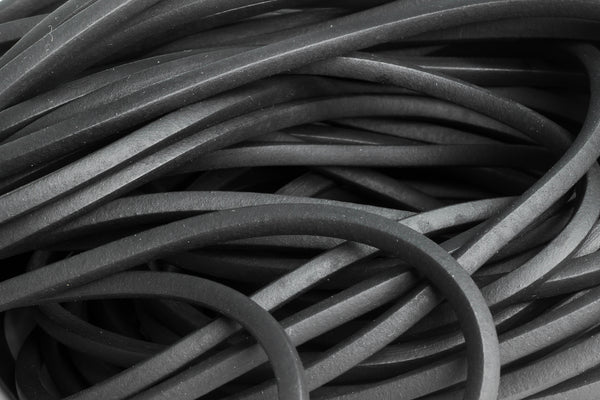
What makes gasket material selection so complex is how every option has a unique personality. Cork, for instance, might seem outdated, but it’s still useful in low-pressure environments where compressibility is a priority. Silicone, on the other hand, holds up against UV rays and wide temperature ranges, making it a reliable choice for outdoor and automotive applications. Felt, fiber, sponge, even ceramic-filled compounds, each material tells a story about where it fits best and what conditions it can endure. It’s this variety that allows a well-equipped gasket manufacturer to serve industries from food processing to petrochemical refineries.
With so many choices, there’s a temptation to assume that close enough is good enough. It’s not. A gasket that fits but doesn’t perform well under specific pressures or temperatures becomes a weak link, no matter how carefully the rest of the system is built. Precision in material selection and cutting technique isn’t an upgrade, it’s a requirement. That’s why professionals rely on suppliers who treat accuracy and quality control as non-negotiables. Because the right gasket doesn’t just sit in place, it works in place, without shrinking, cracking, leaking, or warping under stress.
That’s where a skilled gasket manufacturer proves its worth. Offering access to a wide range of materials is only part of the value. The real difference lies in expertise, knowing what works where, why it matters, and how to get it delivered quickly and correctly. From metal to rubber and every formulation in between, the goal is never just to sell a part. It’s to ensure systems run the way they were meant to, with safety, efficiency, and longevity at the core. When that level of care is behind each seal, it shows in every connection made and every leak that never happens.
